



01 · the opening
Every wave begins and ends at 12 o’clock, where a small gap is left open. It marks the first letter and the last, and the words read clockwise from there, in the order they were typed.
about · the wordwave
one wave, taken apart. nothing in it is random.
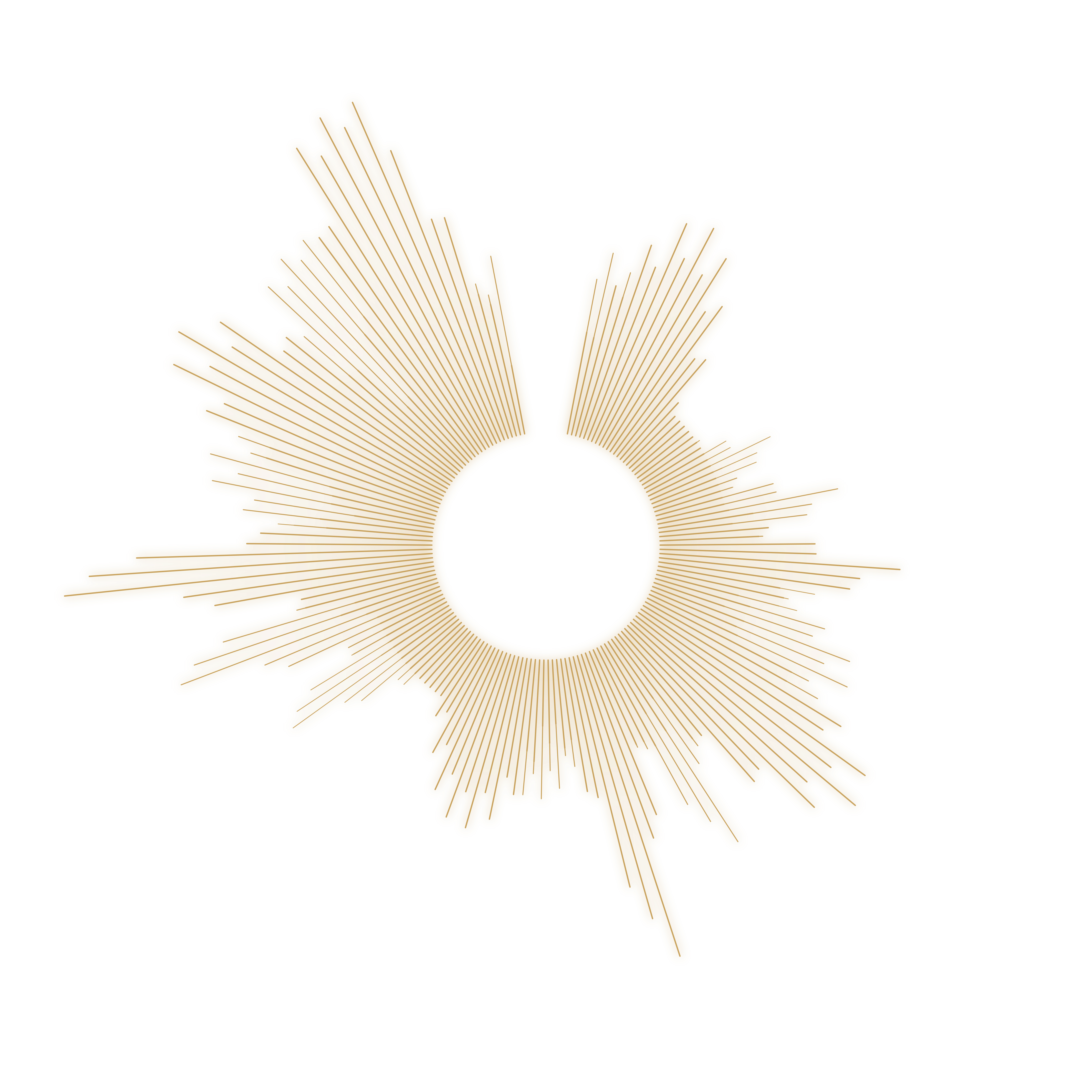
“i love you”
01 · the opening
Every wave begins and ends at 12 o’clock, where a small gap is left open. It marks the first letter and the last, and the words read clockwise from there, in the order they were typed.
02 · the height
Each letter gets its own equal slice of the circle. Its height comes from its place in the alphabet: A is the shortest line, Z the tallest. Longer words simply take up more of the circle.
03 · the shape
Vowels — a, e, i, o, u — are open sounds, so they draw soft rounded humps. Consonants close the mouth, so they draw sharp peaks. That contrast gives every phrase its own rhythm.
04 · the silence
A space leaves a short quiet gap between words. A comma or full stop leaves a longer breath. Silence is part of the design, the same way it is part of speech.
05 · one colour
Every line is the same solid gold. No faded or lighter lines — the only thing that changes is length, so the shape you see is the words and nothing else.
side by side
Both start with “i love”, so the first part of each wave matches. One ends in “you”, the other in a single “u” — so the end of each wave looks different. Change one letter and the wave changes with it.
the formula, plainly
start at the top, read clockwise
each letter = one equal slice of the circle
line height = 25% + 75% × (alphabet position − 1) ÷ 25
vowel → rounded top · consonant → sharp top
space → short gap · comma or full stop → long breath
every line → the same solid gold
Recorded your voice instead? Then the wave is your real recording: loud moments become tall lines, quiet ones short.